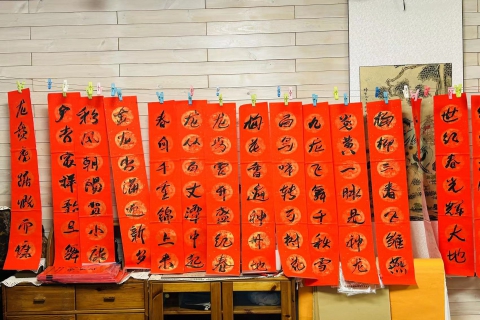
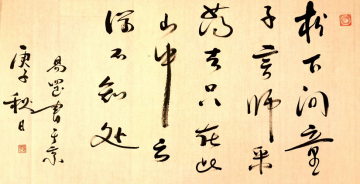
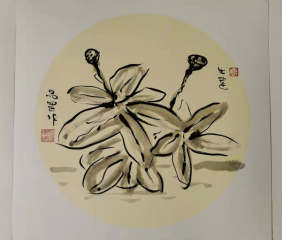
易罡 《图·像思维》 叶祖尧序

《图·像思维》易罡
Raymond T. Yeh Forward
叶祖尧序
Forward
My first impressions in reading, at the end of 2004, Yi Gang’s
e-picture thinking are of both surprise and confusion. I was surprised
that these 108 e-pictures convey such powerful energy, yet I was
confused due to my inability to fully comprehend them. Then I had the
opportunity to meet the author in Beijing at the beginning of 2005 to
discuss e-picture thinking. After many such occasions, I began to get
a glimpse of this powerful new way of expression for the 21st century.
2004 年末,我初次读到易罡生的《图·像思维》一书时,既感惊喜,又颇困惑。惊喜是因为书中108幅图像蕴含了如此强大的能量,困惑是由于我还不能完全理解它 们。后来我有幸于2005年初在北京与作者当面探讨图像思维。在经过多次交流后,我才开始对21世纪这种新颖有力的表达方式有所领悟。
Perhaps a way to describe e-picture thinking is that it contains both
Newtonian and quantum physics. While the Newtonian model effects
change by banging billiard balls into one another, the quantum model
speaks of networks that change because the information flowing through
the networks are meaningful to the participants. Indeed, modern
physics sees the universe as a dynamic web of interrelated processes
with the structure of the entire web determined by an overall
consistency of the interrelationships among these processes. This
world view comes close to Eastern thought, as when Buddha says in the
Hua Yen Sutra that “Everything is created by the mind.” The following
phrase from Tao Te Ching is another way to explain it:
Man follows the laws of earth;
Earth follows the laws of heaven;
Heaven follows the laws of Tao;
Tao follows the laws of its intrinsic nature.
我们或许可以说,图像思维同时包涵了牛顿物理学与量子物理学。在牛顿定律中,结果的变化是由有质球体的相互碰撞引起的;而在量子物理学看来,变化的产生是源 于在网络中流动的信息对参与者的意义。其实,现代物理学认为,宇宙就是一张由许多相互关联的过程组成的动力之网,而整张网的结构则由存在于这些过程中含摄 万有的一致性关系所决定。这种世界观与东方的思想不谋而合,如佛陀在《华严经》所述:“万法唯识”(或“相由心生”?)。《道德经》从另一角度阐述了这种 思想:人法地,地法天,天法道,道法自然。
This convergence of Eastern philosophy and modern physics that
“self-consistency is the essence of all laws of nature” will prove to
be the catalyst for dramatic changes that are happening, and will
continue to occur with increasing magnitude in the years to come.
东方哲学与现代物理学都认识到,“内在的同一性是一切自然法则的精髓”,而这一“同一性”既是当前各种剧烈变化的催化剂,未来也将得到更加广泛的体现。
It is in the context of this new world view of a self-organizing,
participative universe that the book e-picture thinking emerged. This
emergence is a result of Yi Gang’s more than 30 years of dedicated
study of traditional Chinese culture, and through the endless cycles
of germination, convergence, and transcendence in this culture. Like
an embryo subjected to the extremes of hard and soft, yang and yin,
this process cultivated in him the Power, the Field, the Resource, the
Spirit, the Constancy, and the Consistency in his mind with the Eight
Diagrams and the Five Primary Elements that nurtured the development
of this book. It clearly shatters the conventional belief that Asian
creativity is primarily grounded in pattern recognition and the
creation of new patterns based on its language structures. Indeed,
each e-picture, while it cannot be precisely defined, weaves a set of
relationships, depending on the cultural context of the reader,
through languages, religions, arts, etc. e-picture thinking is indeed
a masterpiece of transdisciplinary work. Perhaps this is why there are
so many disciplinary experts try to explain these e-pictures with the
continuing stream of books such as e-picture and life, e-picture and
philosophy, e-picture and water, and e-picture and Tao. Like in
physics, an e-picture consists of both the quantum (reality) and
mechanical (phenomenon), and each discipline must find a way to
explain the reality in its specific context.
《图· 像思维》一书创作的背景正是这种认为宇宙具有自组织性、参与性的新世界观的出现。该书是易罡先生30余年来对传统中国文化潜心钻研的结晶,其思想是在对传 统文化的不断发现、融会和超越中完成的。与胚胎受软硬、阴阳的两极力量控制相似,伴随着八卦与五行学说对该书的孕育,作者提出了“形、态、场、灵、势、 道”的思想。传统上认为亚洲人的创造性主要源于模式认知,新模式的出现源于其语言结构,但该书显然粉碎了这一传统说法。其实,正是由于不能被精确定义,每 幅图可以从语言、宗教、艺术等不同的角度为不同文化背景的读者勾画出一系列的关联关系。《图·像思维》确实是一部跨学科的杰作,或许这就是为什么众多不同 学科的专家都想去解释这些图像,相继出版了《图·像思维与生活》、《图·像思维与哲学》、《图·像思维与水》、《图·像思维与道学》等书。像在物理学中一 样,书中的每幅图像同时包涵了量子(现实)与力学(现象)两个方面,而每个学科都必须在各自语境下找到各自解释现实的方法。
It is my understanding that the author wrote down the 108 e-pictures
within an hour in a state of mental non-attachment. In such a state of
total harmony with nature, the e-picture emerged with an initial
thought, the result of 30 years of dedicated work leading to the
convergence as well as transcendence of the Chinese language, art, and
religious traditions into a synthesized 108 e-pictures, each a
calligraphic diagram with a four Chinese character explanation—a
stunning achievement. Perhaps what Chuang Tzu said in the fourth
century provides a good backdrop context for the e-pictures:
窃 以为,作者创作这108幅图像的一小时是精神处于无著状态的一小时。在这样一种完全融于自然的状态下,这些图像是作者直觉意识的自然释放,也是他30多年 潜心钻研的结果。他把对中国语言、艺术和宗教传统的思考融会贯通并加以超越升华,最终凝结为108幅绘图,每幅都配有四字文的解读。这的确是一部令人惊异 的杰作。或许公元前4世纪庄子的一段话可以看作是对这些图像非常好的说明:
She who wants to have right without wrong,
Order without disorder,
Does not understand the principles
Of heaven and earth.
She does not know how
Things hang together.
(大意:只想要正确的、不想要错误的,只想要秩序而不想要无序,这样的人不懂得天地之道,不知道万事万物的结合之理。)
It is great to hear that Bao Ching Jewelry in Nanjing would like to
publish e-picture thinking in gold leaf to keep it forever. I joyfully
support such a meaningful act and am happy to write this forward for
this edition of the book. It is a powerful step towards the
development of a T3 (trans-disciplines, trans-cultures, and
trans-geographies) culture, which embraces the whole mind, necessary
for the 21st century. My congratulations to Yi Gang for his pioneering
work.
很高兴得知南京宝庆银楼意欲以金箔出版《图·像思维》一书,以便于永久保存。我欣然支持此有意义之举并很乐意为本版作序。对于“三跨文化”(跨学科、跨文 化、跨地域)的发展,这是极具影响力的一步。这种文化是对心智的整体接纳,为21世纪所必需。我在此为该先驱性的作品恭贺易罡先生。
叶祖尧博士 日本软件协会荣誉主席
印度国际软件发展中心荣誉主席、总顾问
中国台湾资策会(III)发起人 中国机械工程学会荣誉主席中国第一届计算机领导小组顾问(1982年)
美国知名学者、德克萨斯大学教授 美国国际电机电子工程学会(IEEE)院士
下一篇:循 道——荐易罡《图·像思维》
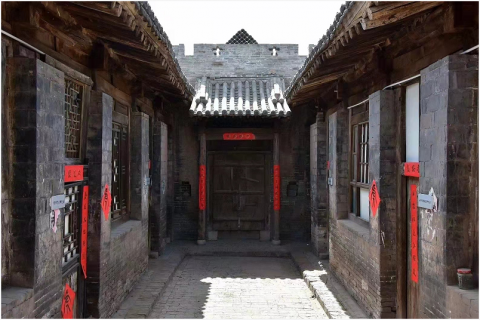
2022年董宅保护与挖掘发展工作第二阶段初步计划
2022年董宅将进入保护与挖掘,挖掘与发展工作进入第二阶段。随着太原理工大学、浙江大学、南开大学等相关研学基地再董宅落地。未来工作将从以下三个方面进行。
传承与活化——山西祁县晋商故居董宅历史保护记
中华大地上的院落式古民居,记载着一个个家庭成百上千年的根魂历史,是留住“美丽乡愁”不可再生的物质基础,也是助力乡村振兴的重要方面。从自身实际出发,探索非保护名录内乡土建筑的合理化保护之路,是山西祁县董宅业主思考和实践的地方。自2017年项目启动以来,已完成了专家考察评估、历史研究、小院故事撰写、数字化测绘保护、古建筑维修、小院活化利用等多个环节,增强了亲友的自信心和凝聚力,促进了家风的传承,故本文记录以供参考。
- 2025-06-29晚清晋商镖师 董之鍼组诗
- 2025-06-19晚清晋商镖师
- 2025-06-19故事里的祁县“土话”
- 2025-06-19《晚清镖师传奇》(初稿)
- 2024-08-12又赴春城
- 2024-07-04云南行(二)

- 2025-06-29书屋快讯(2025年第二号)
- 2025-06-29书屋快讯(2025年第三号)
- 2025-06-29著名建筑理论家、策展人王明贤逝世
- 2025-06-29书屋快讯(2025年第一号)
- 2025-06-19第二届全国建筑评论会简要回顾
- 2024-09-27孩子们的运动会